
Welcome to the 5 Questions Series. Each week, I’ll ask five questions of some of my favorite authors, editors, publishers, and other industry professionals. This week, I’m talking with Robin van Eck about about what it takes to build a vibrant writing community, how the Alexandra Writers’ Centre Society is reimagining literary spaces, and why storytelling remains one of the most powerful tools for social change.
The Alexandra Writers’ Centre Society provides a space for writers of all levels, from absolute beginners to seasoned professionals. What do you think makes a truly inclusive and supportive writing community, and how do you cultivate that at AWCS?
All stories matter. It doesn’t matter whether you’re writing dark romance, high fantasy, poetry, memoir – something I have learned over my many years with AWCS is that no one person’s story is better than the next. We have tried to cultivate that at AWCS by being broad in our offerings – providing opportunities for people of all genres to explore and create in a safe and inspiring environment
AWCS actively works to remove barriers by offering grants and sponsorships—why is accessibility in the literary world so important, and how do you ensure these opportunities reach the people who need them most?
Writing—and art in general—is a way for individuals to express themselves in a very complicated and messy world. We write for a myriad of reasons: mental health, healing, processing emotions, understanding, entertainment. Everyone should be able to enjoy that no matter where they come from. But writing is often so isolating. What we build at AWCS, is a community that cares and supports one another—and that is healing on so many other levels, with or without the words.
We build stronger community by working together. In order to do that we explore collaborations with communities that wouldn’t normally have direct access to our programs and services, while also working with the various like-minded organizations.

AWCS took over the When Words Collide writing conference, one of Canada’s beloved literary events. What was that process like, and what is your vision for the future of this conference and other AWCS initiatives?
The process was fairly straightforward. When we heard the When Words Collide Society would no longer host the festival unless they found someone to take it over, and we heard the cries from the community, I approached them and said, hey what about us?
Though it’s not something we took lightly. It did take much deliberation by our board to ensure we had the capacity to take it on, not just the financial means and we needed to make a plan to ensure that this would be a success.
At the core of it, we want writers to succeed, we want to provide them the means, the tools and the opportunities to showcase their work and get it out to the reading public. What I always loved and admired about the When Words Collide festival was the energy and excitement that overcame the attendees for a weekend. I’d never experienced anything quite like it. Not a single writing conference felt this way to me. There was something truly special raging around the rooms, in the pubs, at sessions, as writers came together to learn, to share, to connect with others. That is so powerful.
As long as we never lose that, we can’t go wrong. That goes for AWCS as well.
We will continue to support new and emerging writers, while also giving opportunities to the more seasoned writer to share their expertise. Support works both ways and we couldn’t do any of what we do if we didn’t have the amazing instructors, mentors and editors that we do.
With special events like your Trans Day of Visibility program, AWCS proves that writing is not just about craft—it’s also about representation, storytelling, and activism. How do you see writing as a tool for social change, and how does AWCS foster these conversations?
I’m not even sure where to begin on this question. Writing is the biggest tool for change, for knowledge, for empowerment in an individual. If it wasn’t, there would be no need for book burning or book banning, social workers and therapists wouldn’t have been using it as a tool for healing for centuries.
There are some stories that stand the test of time: think of all the references to living in an “Orwellian world”, or The Handmaid’s Tale becoming reality. Ray Bradbury’s Fahrenheit 451 is still as relevant today as it was during World War II. Stories can warn, stories can teach, stories can engage and instill empathy, stories can make us rage, cry, laugh, love. Stories can teach and with that comes knowledge and knowledge is power. There is not much else that can do all these things in one medium. It’s really quite amazing the power of words. But those words can’t all come from one voice and that’s what AWCS aims to do. Give space to all voices, because everyone has a story. Maybe they don’t know what it is yet and once we massage it out of them and that story changes one person’s way of thinking, then we have succeeded.
On top of all of this, you offer so many classes for a variety of levels of writer from emerging writers to people who have been writing for years. How do you determine which classes to choose and what programs would you like to see that you haven’t yet given?
I wish there was a magic formula when it comes to choosing classes but really it comes down to what’s relevant, what’s popular, what have people been asking for and what are people pitching? I’ve been doing this for more than 15-years and there are definitely patterns that emerge and so programming is designed to fit those patterns – such as we see the highest influx of new interest in September (back to school) and January (good old new year resolutions). The spring tends to be slower because the snow is melting, good weather on the horizon so we focus more on creativity-based programs and having fun, more community-building sessions, panels, guest speakers.
Unless there is something that I feel we are completely missing, we typically pull from proposals submitted by instructors. We try to avoid too much overlap in sessions, and each term, we attempt to minimize repeat classes running back-to-back unless they were super popular.
We don’t really know what we are missing until it’s submitted. I’m always on the lookout for proposals that excite me, that are different yet well thought out. On rare occasions, we’ll have an idea and then we’ll create it ourselves and find someone to teach it.
Bonus question: Have you ever taken a picture of a weird bird?
Stop judging me. I take too many selfies as it is.
Bonus Bonus Question: Even though you run this amazing organization, presumably you are also a writer. How do find the time and what are you working on?
My instinct is to say I don’t, because I spend all this time helping others, my work is my joy and how dare I take time for myself. It’s funny, it’s tragic and makes me look like such a hard-working person, giving to everyone else.
But the reality is, I write. I write all the time. Not always something dramatic and passionate and publishable, but I write.
My first novel came out in 2020. I’m working on a new novel that is almost done, but I have stalled out with the edits, I’ve lost a little joy and enthusiasm in the project, even though I still love the story and the characters. I’ve been spending some time writing personal essays and short stories and doing some freewriting for the sake of creativity, but with no real purpose. The other day I got a prompt that had to do with peas and it was silly at the time, but now I’ve come up with a new essay that is interesting to me and could actually go somewhere. One never knows where inspiration might strike them or what will resonate. That’s why I find writing equal parts challenging and hard work and fun and inspiring.
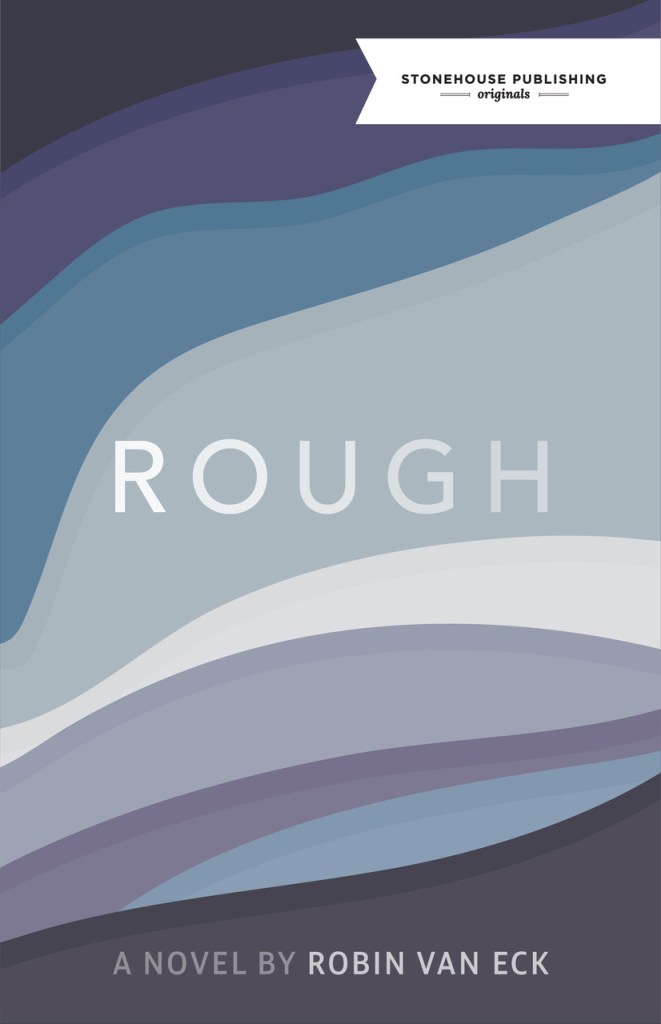
Robin van Eck is the Executive Director of the Alexandra Writers’ Centre Society and the author of Rough, a novel published in 2020. She can be found here.
 Finnian Burnett
Leave a comment