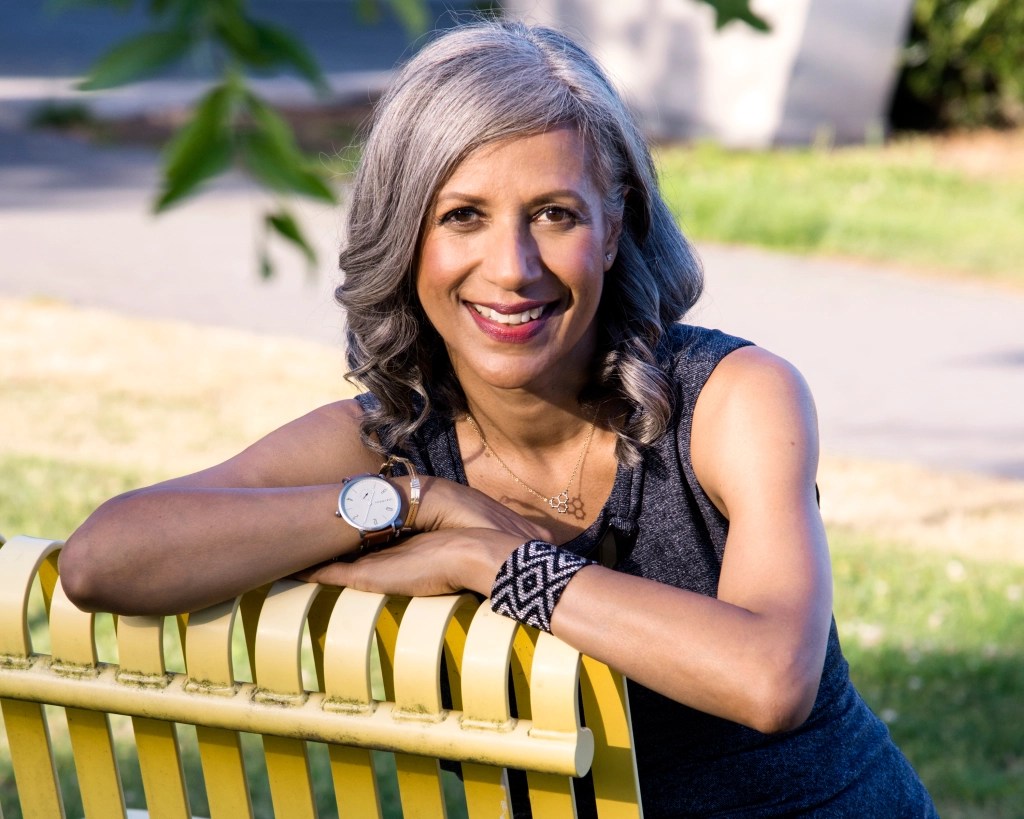
Welcome to the 5 Questions Series. Each week, I’ll ask five questions of some of my favorite authors, editors, publishers, and other industry professionals. This week, I’m talking with Renée Sarojini Saklikar.
I am absolutely fascinated with epic fantasy in verse. Can you tell me about your series THOT J BAP?
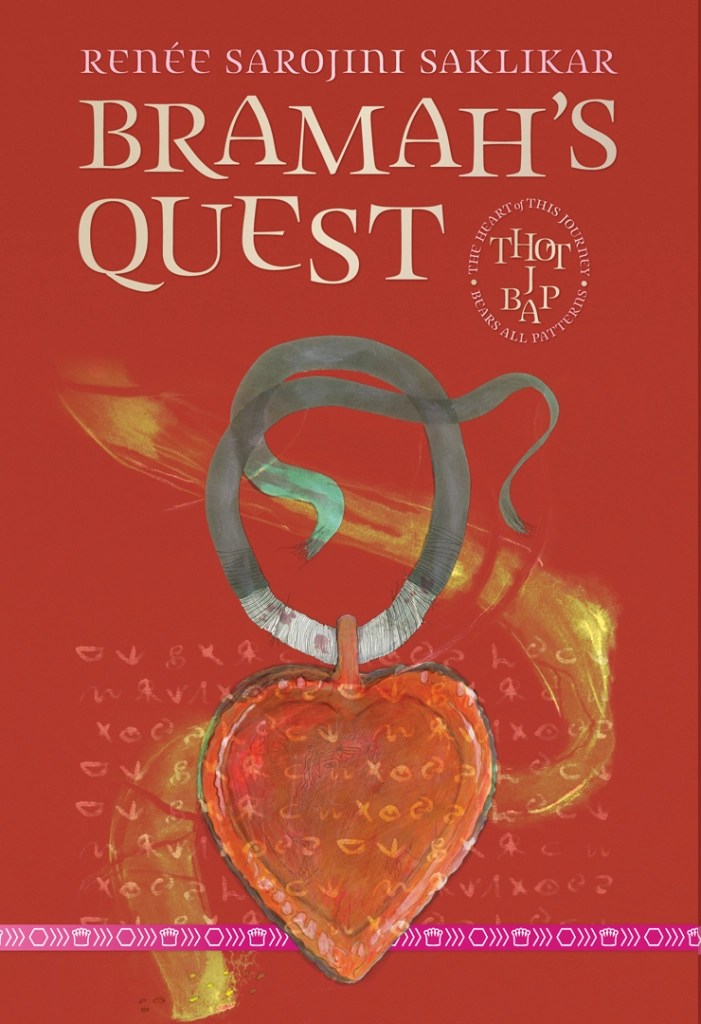
The Heart of This Journey Bears All Patterns, THOT J BAP, is an epic speculative fiction in verse. The books blend and bend fiction and poetry, weaving politics into a family saga that connects themes of eco-catastrophe, injustice and resilience.
The first two books in the series, Bramah and The Beggar Boy & Bramah’s Quest, feature the time-travelling demigoddess, Bramah. She’s a locksmith valued for her nimble way with doors, vaults, and secret codes. Hired on contract by the evil Consortium, Bramah finds ways to help seed savers and resisters survive climate change and global inequality. All the while, she’s on her own mission: to discover the truth about her origins.
Stay tuned for the third book in the series, Bramah’s Discovery (all published by B.C.’s own Nightwood Editions), forthcoming in Spring 2026!
And hey, here’s a synopsis, I’m delighted to share for your blog:
In Bramah’s Discovery, the year is 2110 and Bramah’s journey to discover the truth about her origins and to find out more about her parents, continues. Along the way this time-travelling locksmith rescues her friend, Amahl the Beggar, trapped in the Eternal Game of Climate Chess; eludes an evil drug-lord; encounters two shape-shifting mythical beasts, Fanon and Gavroche; breaks free from captivity in Baghdad; and battles wits with a Paris collective of super naturals. Each challenge forces Bramah to discover truths about her own demi-goddess self and the price of idealism in the face of ecological and economic calamity.
You write about some hard-hitting issues. Climate change, gender equality, racial equality—do you think authors have a responsibility to address social justice in their works?
Now that’s a very interesting question: as a poet and a speculative fiction writer, those issues are just part of the DNA of how I see the world: so, when characters come to me or fragments of sound or image arrive, they just seem inextricably linked to historical, political, socio-economic, ecological happenings, in addition to personal/confessional experiences. I think each writer, living and working in these fractured times, needs to find their voice in and through social responsibility, if that makes sense. Conversely, the last thing that works for me is to be didactic. Art/poetry/speculative fiction: I try and listen to the story. What does it need and want?
You were poet laureate for the city of Surrey! What did that involve?
Oh, I’m so glad you asked. I was Poet Laureate for the City of Surrey from 2015-2018 and it was the honour of my life. Being Laureate involved writing, reading, presenting and connecting. For example, I wrote poems for special events; organized, created, and offered literary and writing workshops and readings; collaborated with a wide range of artists and creatives plus community members to put poetry “on the page and the stage;” plus, working with amazing folks at the Surrey library and Museum of Surrey, we published a book (Surrey Stories Connect) and I wrote a poem-play about Canadian Nurses in War Time!
How important is writing community to you and where do you find it?
So important, especially after the pandemic times of isolation. I am fortunate to find community by volunteering with and supporting the good folks, at, for instance, the Surrey International Writers Conference; Pulp Literature magazine; Turning Point Ensemble; Event magazine; and poetry in canada; plus, highlight: I helped to found and now co-curate, Lunch Poems at SFU, one of B.C.’s longest running and only noon-hour poetry reading series. My late parents instilled in me this practice of volunteer service which was honed and encouraged by visionaries such as the founding director of The Writer’s Studio at SFU, Betsy Warland. Early on in The Studio, back when I was starting out with hopes of being a published author, Betsy spoke to my cohort about the importance, as creatives, of reaching out and of building relations.
It can be a very lonely life, writing. Especially if one is in any way “othered.”
Reaching out, despite “not knowing anyone,” can be scary. I love the way you spoke about this very thing as a Keynote Speaker last fall at SiWC: not a dry eye in the house, Finnian! Thanks so much for reaching out to me. I am thrilled to be in community with you.
What are you working on now?
I am working on what will be my sixth book, third in the THOTJBAP series, Bramah’s Discovery. Plus, excited to also be working on a children’s literature spin off, “Bramah and the Seed Jar,” and grateful to be a recipient of a Canada Council grant for my research and development.
My latest gig, teaching creative writing at Douglas College, puts me in all kinds of contact with a collection of wonderful writers and students. Building out course material and teaching is right now a big part of my writing practice. Gratitude.
Bonus question: Have you ever taken a picture of a weird bird?
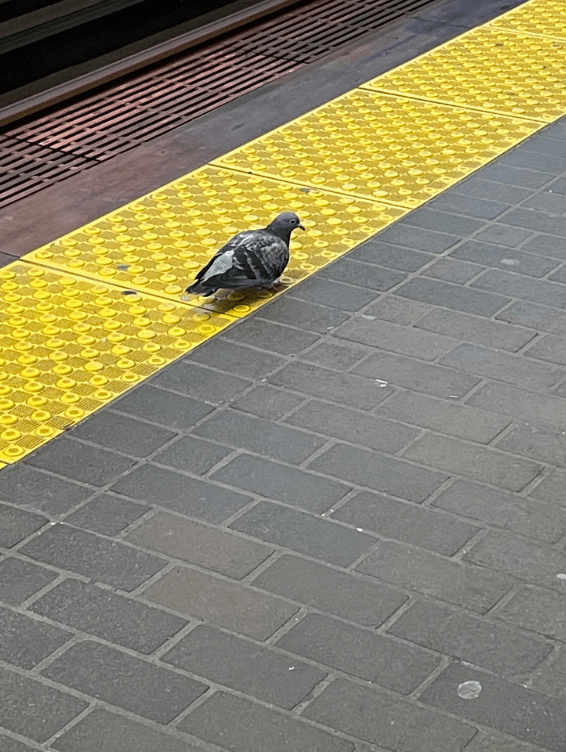
Okay. I LOVE this question. Short answer: nope. More detailed response: But now that you mention it, I’m just waiting for that “perfect bird” to fly my way! P.s. I do take a ton of flower, tree, and bee photos, though. 😍 (Ed. Note. Not a weird bird, but Renée did send a cute bird pic.)

 Finnian Burnett
Leave a comment