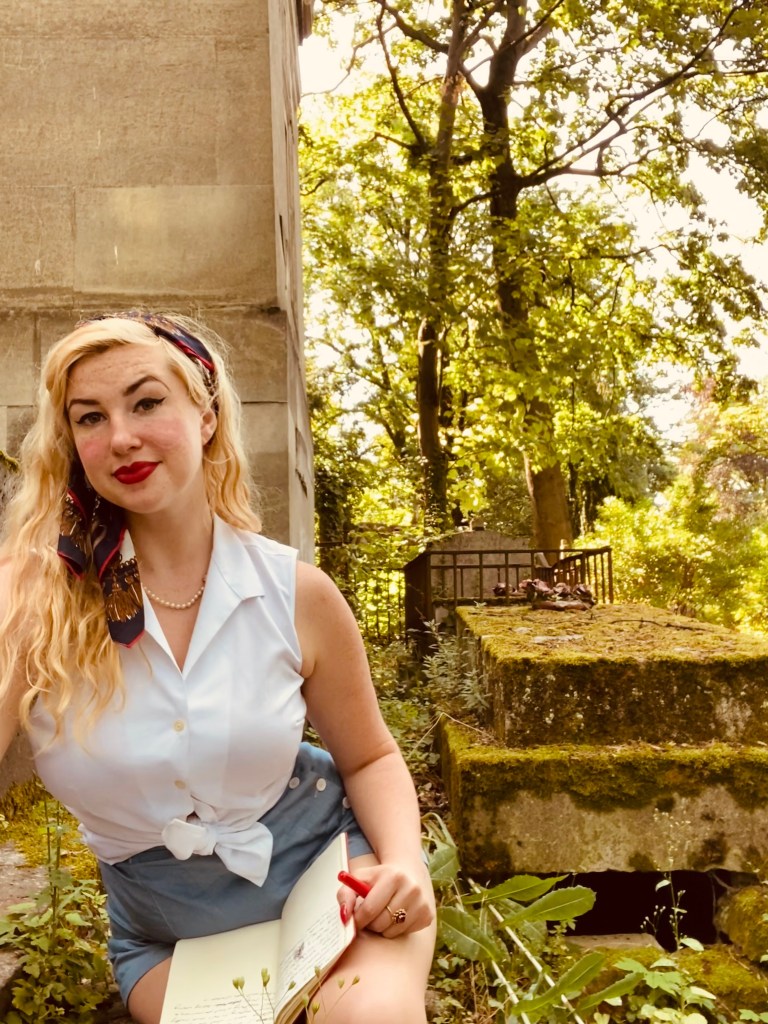

Welcome to the 5 Questions Series. Each week, I’ll ask five questions of some of my favorite authors, editors, publishers, and other industry professionals. This week, I’m talking with Leia Bradley.
You were the featured author in Anodyne Magazine’s inaugural issue. Tell me about that process, the poems you submitted, and what inspired them.
It was so wild to be chosen!! The other writers in the issue are beyond incredible—I am just so honored to get to share space with them. I still feel like I’m just some small-town gay shouting into the void, so it’s an amazing feeling for my work to be recognized in that way. Anodyne’s focus on health issues that directly affect the FLINTA* community was an opportunity for me to talk about the kinds of illnesses present in the behind-the-scenes lives queer people lead. I love the glitter and pomp of Pride—it’s so important to celebrate us—especially when remembering Pride is supposed to be a form of protest, and historically a riot (Queer Liberation March and the Dyke March both have made me feel much more rooted in a radical, direct-action role on the streets during Pride). I’ve believed for a long time that as much as promoting our joy as a community is vital, it can make it difficult to talk about issues we’re facing that aren’t fun to talk about—like alcoholism, like domestic violence, like severe depression—and it doesn’t serve anyone to ignore those issues, which are, at their core, class issues. When it’s harder to get a job because of who you are it’s almost impossible to get health insurance, to get medication, to get therapy.
There’s so much pressure on us, in my opinion, to be socially acceptable in the eyes of straight (white) people because they’re the ones who make the laws on whether we live or die, they’re the ones who allow us access to healthcare that can determine that fate for us. And it leaves such little room to actually be a human with complexity without a sense of stigma that you’re making the community look bad by talking about what’s happening in your life. Queer people are, big surprise, people, and we’re just as complicated as everyone else—maybe more so, for better and for worse—and we need space to feel comfortable exploring the more gritty parts of our lives, and we need those spaces to be accessible.
I’ve found that the literary community can be hesitant to promote work that doesn’t cast queerness in this fantastical, magic glow of ethereal love and wonderment, and it’s beautiful to be in love and find your truth and your people, obviously, but when submitting to Anodyne, I was hoping work of mine that deals with the gritty underbelly of all it takes to survive would finally find a good home. All of my poems in this collection are narrative, so they’re vignettes of different lovers, historical figures, mothers by blood and by bond, et cetera. The poems are also epistolary, and the direct address creates an inherently erotic voyeurism for the reader in that they’re seeing something they’re not supposed to see, but I’m letting them behind the velvet curtain into the cold, grimy back alley.
My poem “June, Where Did You Put The Time?” is about loving someone battling alcoholism and knowing it could be me, too, in no time, if I’m not careful. It’s about not knowing what to do to support yourself or the ones you love in a police state built on racism and for-profit incarceration, sending cops out to a wellness check instead of social workers. NYC Mayor Eric Adams just slashed funding for education, homelessness, and public libraries in favor of more police for curbing fare jumpers. The government’s priority has never been to actually help the people it claims to be helping—it wants to profit off our demise. And the depression that comes with that realization while being in love with someone with a disease brought on by such layered levels of discrimination and suffering—it’s devastating. Dealing with the survivor-mode mentality of generational trauma is really hard, and we should be talking about it. Being so focused on being able to afford groceries and electricity and medical bills wrecks your sense of belonging and identity entirely—that’s also explored in the other two poems in Anodyne: “Sabina Spielrein, Did You Like Being So Known?” and “Mama Ain’t Most,” in which labor and identity are inextricably wrapped up in each other tight as two boa constrictors fighting to eat the other up, consume one another entirely. I was in and out of mental health facilities all my teenage years, and what it really comes down to is that the system doesn’t want us to succeed. It profits off of our suffering. So survival in itself is a defiant, revolutionary queer act, and I hope the work speaks for itself on that.
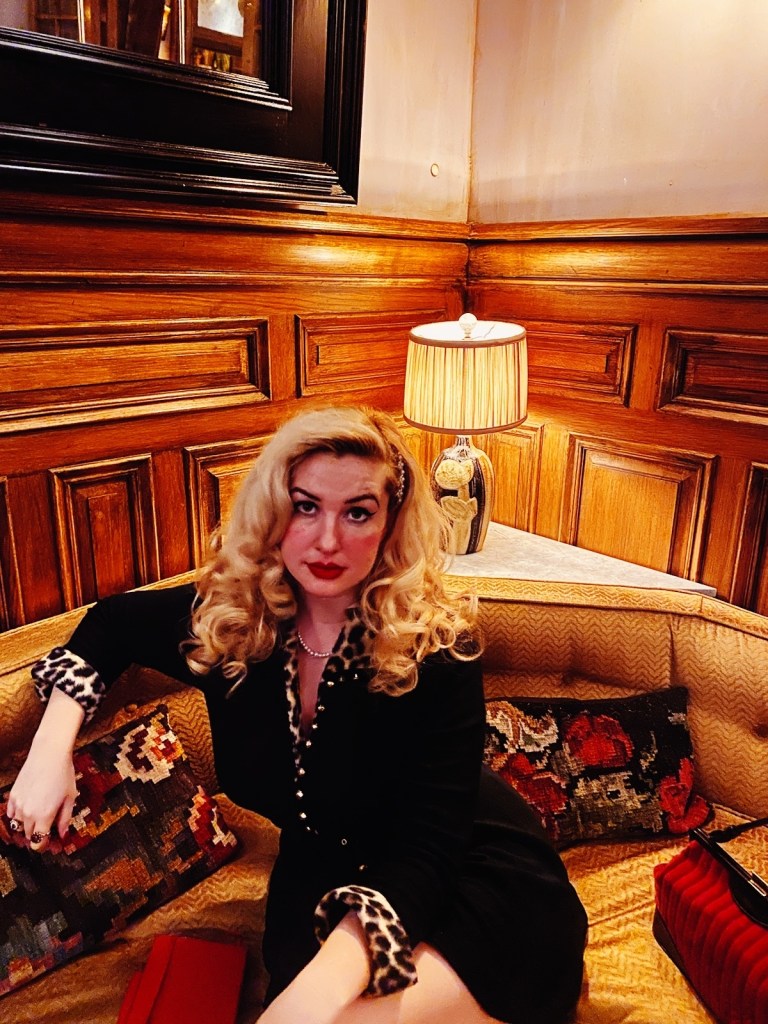
How important is queer representation in your work? In literature in general?
Everything I write is gay and I love it that way! I had a terrible ex-girlfriend who told me all the time how I wasn’t a “real” lesbian, that I wasn’t a “real” femme, all that abusive rhetoric meant to strip you of your confidence and your love of life, separate you from your community. Of all the things she said to me over the years we were together, that one always stung the most. I’d come to learn this is a classic tactic of abusers. Combined with the physical violence of that relationship, it really made me feel I wasn’t doing anything right, down to the deepest levels of my identity. I think it’s so important to know there isn’t a right way to be any kind of lesbian, or any kind of queer for that matter. There can be a lot of gatekeeping in queer culture, and I get it–if we don’t protect our values, then who will—but there comes a point where creating more division totally goes against the point of queerness, which is to fuck things up for the better (or just because we can, and look hot doing it). Imagining queer futures in which limits of sex and gender fuse and melt and get weird and jagged—that’s what really gets me going. Davey Davis’s X, Joss Lake’s Future Feeling, Bad Girls by Camila Sosa Vilada, and pretty much all of Carmen Maria Machado’s work do that so gorgeously, and they’ve made me challenge the limits of what I thought “queering” writing meant, which is beyond fantastic. I’m so looking forward to reading Greasepaint by Hannah Levine, too, (1950s lesbians!) which is about to come out through Nightboat. I just want everything to be as gay and kinky as possible at all times, really, and I continue to imagine radical new ways of creating community and all the weird, delightful ways that can take form.
If you could have one superpower, what would it be?
To be on time! I recently had a sweetheart butch tell me our dinner was 45 minutes earlier than the actual reservation time, because they knew I’d need to replace my stiletto heel caps or sew a zipper back on or need more time on my hair. Sigh. Life of a femme!
I absolutely screamed over your Pushcart nomination this year. Also, lesbian werewolves?
Thank you! I screamed too!! I really couldn’t believe it. Still can’t! I’ve had a lot of pushback on work that features gay sex, which I think is so funny. The amount of bad sex I’ve had to read by straights, you know? God forbid there’s a strap on in the sex scene!
But Miniskirt Mag was so awesome and supportive about the piece–which is, yes, about lesbian werewolves! I’m obsessed with the devouring hunger of queer eroticism, of dykes mauling and moaning all in the same delicious consummation, which feels like this sculpture by Berlinde de Bruyckere called Into One-Another III To P.P.P. (2010) or Gluck’s Medallion, a double portrait of the two lovers where they seem to be coming out of each other, of the same body, looking towards the same horizon. Themes like transformation, transition, having to hide your true nature, and how primal and feral it feels to liberate yourself from having to hold yourself back to survive…yeah. Doesn’t get gayer than that! Also, any excuse to go back to my roots and do some Southern Gothic, and get some retro pickup truck, blue-jean butches in there, I mean, Jesus take the wheel. I’m thinking I might have to do a whole novel. I might already be.
What are you working on now?
Well, fine, yes I am working on a novel about lesbian werewolves! All werewolves are gay, actually, because yes. The fur, the flannels, the log cabins and the mud and the pines, the haunted summoning forest, the small town, Southern gothic…I am really seriously over the moon (ha!) about it. I’ve also been at work on two other projects: one more of a research project on domestic violence in lesbian relationships and trying to compile more data on the subject and weave it into a lyrical personal essay, as well as another novel(la) on queering the idea of the muse. I won’t say too much about that one because it’s still growing limbs, but right now the lesbian werewolves are all I can think about. The dynamic of the werewolf pack as found family is wrecking my heart in the best way. I’m almost finished with the first draft and really excited to see where it lands; it feels like some drawling two-step between a lesbian pulp novel and a Wyeth painting. Bloody and hazy, lipstick stains and rusted chrome by the lakeside.
I also still write poetry every day; I have compiled a collection of all my epistolary narrative poems and am sending them out into the world as a potential book, so fingers crossed!
Bonus question: Have you ever taken a picture of a weird bird?
I am upsettingly totally lacking in the weird bird department. I did however see three vultures just hanging out in some pine trees the other day by my grandmama’s old house… creepy! But also so gorgeous. However I do have this picture of some adorable sleepy cows on a best friends trip down South. It was supposed to be a writing trip, but it ended up being a soup-making and wine-drinking trip listening and crying and dancing to Joanna Newsom and Loretta Lynn.

Thanks for having me, Finn! Such an honor ❤
Leia K. Bradley can be found on the social media site formerly known as Twitter
 Finnian Burnett
Leave a comment