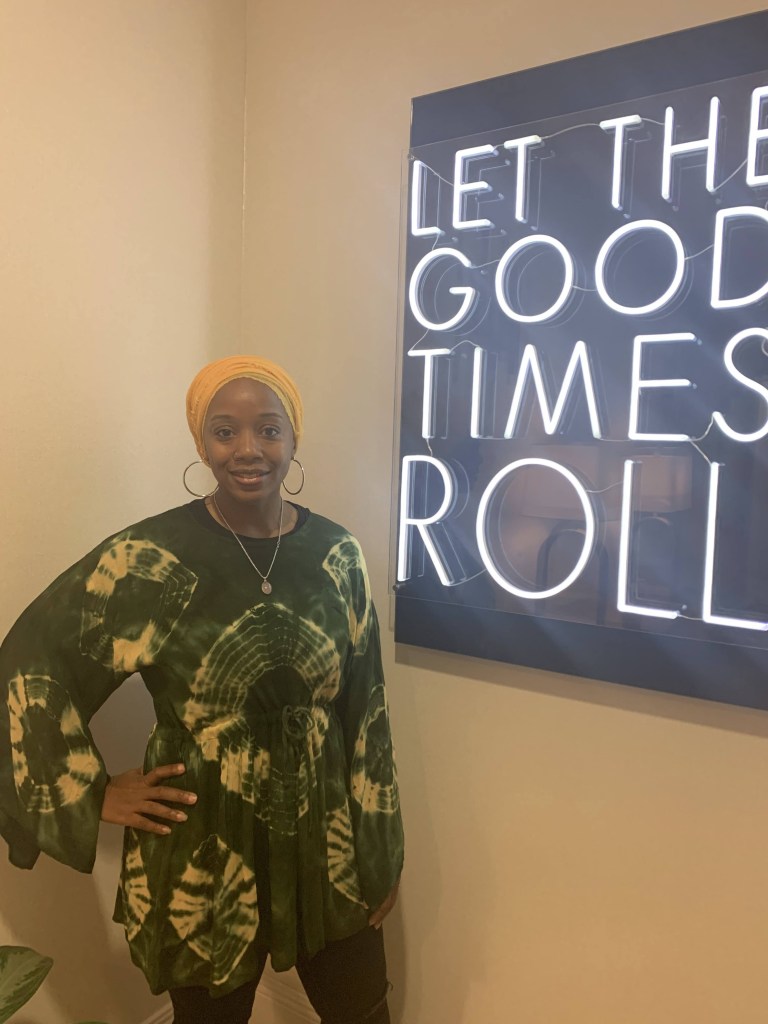

Welcome to the 5 Questions Series. Each week, I’ll ask five questions of some of my favorite authors, editors, publishers, and other industry professionals. This week, I’m talking with Amani-Nzinga Jabbar.
I had the great privilege to read your story “It Could Have Been Worse” in Anodyne Magazine’s December issue. Can you talk about that story and the inspiration behind it?
I had been doing a lot of reading about women of color and how our experiences when seeking help in medical settings are often painted with strokes of bias. We all know, or should know, that women in general are often ignored, gaslit, and mistreated when seeking treatment. This can lead to so many issues from delayed diagnoses and even worse. Yet, for women of color, it can be even worse. Lately, there has been a lot of research coming out about implicit and explicit biases in medicine and how they can lead to our pain being ignored or minimized. However, all of this can feel very technical. Sometimes we can know something and believe it to be real, and still not make the connection until we put a face and name and a concrete example with it. It’s for these reasons that I decided to write about my own experiences with the medical establishment. I wanted to express the anguish, and the physical and mental pain, that can come with being dehumanized. This story is one that rings true to a lot of women, as so many of us leave doctors’ offices feeling abused and I hope to show women they’re not alone. Maybe with greater awareness the tide will start to turn in a positive way.
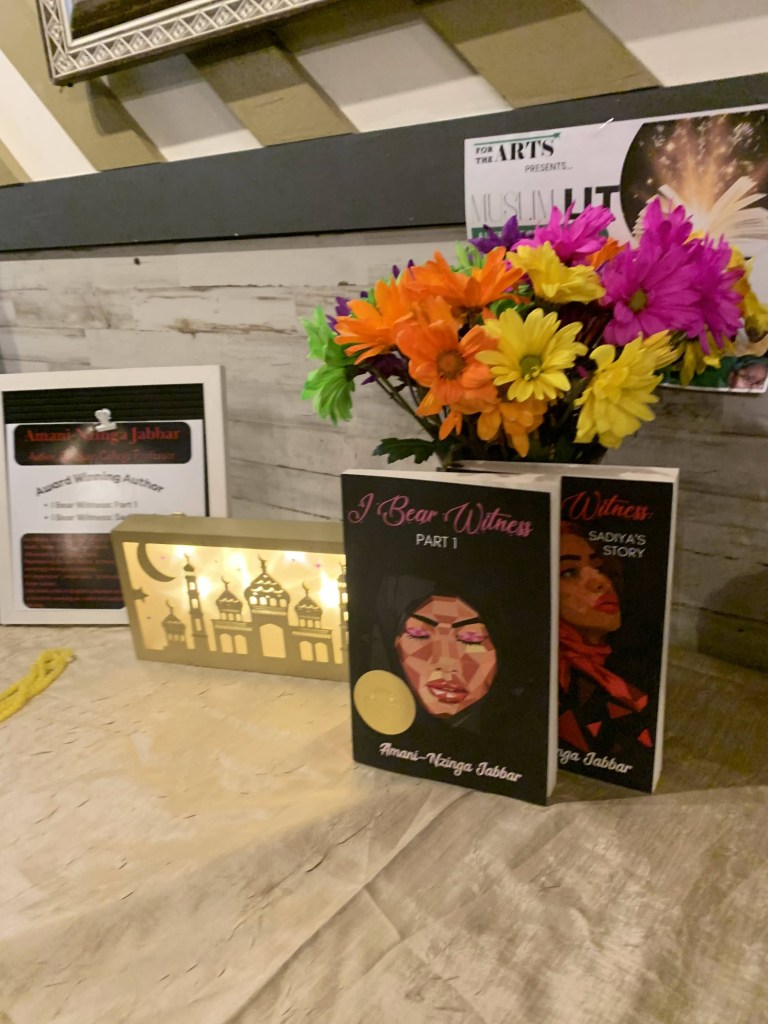
Your book, I Bear Witness, won the Daybreak Press Book Award for Islamic Fiction. What was that book about, and can you talk about the reception it received when it was published?
I Bear Witness tells the story of Anaya, a sheltered and somewhat naive young Muslim woman living in New Orleans. It’s part coming of age novel and tells about the protagonist’s experiences with betrayal and how she reacts to realizing that you can do everything “right” and things can still turn out all wrong. The reception has been good, and I’m very grateful for the support I have received. As writers it can be so hard to put out work out there, because once it leaves our hands there can be a fear that it will be judged harshly, but so many readers have shared positive feedback and their comments give me a boost and a desire to keep writing.
What book do you wish you had written and why?
I wish I had written Transcendent Kingdom by Yaa Gyasi. It’s a beautifully tragic book about the fractures that can occur within a family, fractures caused by separation, mental illness, and substance abuse. The novel touches on so many important topics, but does so in a way that is not at all didactic. One day, I hope to be able to write like that.
What is the best piece of writing advice you have ever been given?
“Write without fear and edit without mercy.”
What are you working on now?
I’m currently working on the thesis for my MFA. I’m about halfway through. It’s about the theme of home and how we change homes and homes can also change us. Being a survivor of Hurricane Katrina, and also someone who has been uprooted several times, the home is a word that brings up feelings of joy and comfort, but also pain, loss, and even sadness.
“Write without fear and edit without mercy.”
Bonus question: Have you ever taken a photo of a weird bird?
I take pictures of bird families. I just love seeing mother ducks trying to keep their ducklings together, and even though as soon as the mother gets all the ducklings together, one wanders off. Yet, the mother ducks never look demoralized, and they never seem to give up trying.
 Finnian Burnett
Leave a comment