

Welcome to the 5 Questions Series. Each week, I’ll ask five questions of some of my favorite authors, editors, publishers, and other industry professionals. This week, I am so happy I got to speak with Vincent Anioke about his upcoming release, writing community, demystifying publishing, and of course, weird birds.
You were one of the finalists for the RBC Bronwen Wallace Fiction Prize. How did you react when you got the news about that and what was the experience like?
The news came on the phone. When I heard, “Congrats, you’re a finalist,” I let out this loud, undignified squeal. Weeks later, reading the jury citation of my story as “short fiction at its best,” I couldn’t help tearing up. I sometimes worry about the strength of my reaction to external validation, especially when my writing derives itself from intrinsic motivations, but I suppose that this is the nature of sharing work you hope connects with readers.
Still, the experience RBC finalists received was beyond anything I’d seen in prior contest placings. They booked us trips to Toronto, hosted us in a nice hotel for a couple days, treated us to a family-style dinner, and indulged us in a formal award ceremony with wine and food. I got to read to a room full of incredible writers, editors, and agents. Meeting Zilla Jones at the finalists’ dinner was also a highlight. We’d read each other’s stories before, even crossed paths on prior contests, so getting to finally talk in person felt like a pending moment finally realized. Her passion and knowledge and personality shone brightly.
I also can’t pretend that my heart wasn’t drumming at a fever-pitch pace the moment before the winner was announced. Such a briefly infinite moment. My friends were there too, and they said they stopped breathing. Zak Jones won, very deservedly, for his piece, “So Much More To Say”, a fresh and riveting exploration of dignity and cross-cultural unity in the face of death.
Being a finalist alongside stories I deeply admired was such sheer validation. We need the encouragement sometimes. This writing thing can be so unwieldy and frustrating. There are days you look in the mirror and wonder if your words are worth squat. If you’re screaming into a void. If the void can be enough. The moment someone says, “we’re listening”, it’s–in a word–transcendent.
You have a short story collection coming out in 2024. Would you talk a little about the works in this collection?
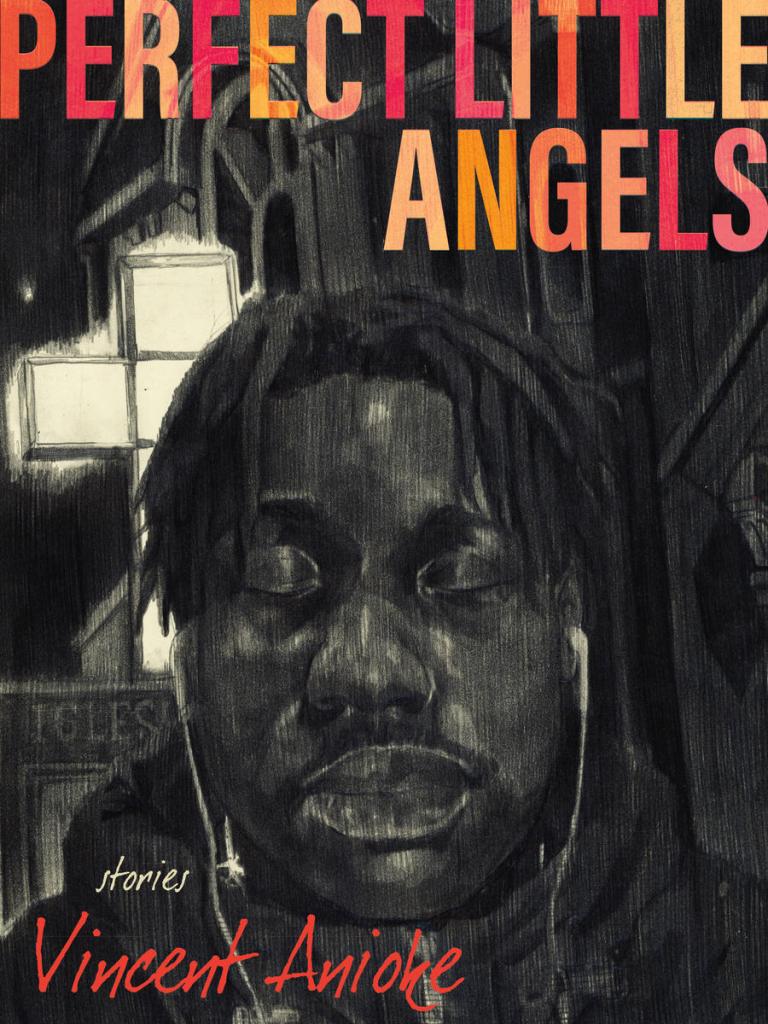
Absolutely! My debut collection, “Perfect Little Angels”, comes out in April 2024 from Arsenal Pulp Press. It contains 14 stories, a mix of published and unpublished work, with lengths spanning 800 words to 11,000 words, and stories set mostly in Nigeria, but sometimes in Canada. I’ve written scores and scores of stories these past four years, and I think this book highlights the best of them.
Thematically, “Perfect Little Angels” is concerned with the bounds of empathy. Our capacity to care for strangers or mistreat our flesh and blood. Our troubling instincts to categorize the messiness of one’s humanity in neat constricting boxes. In these stories, victims reject their victimhood in cruel ways, and saints hide ugly secrets. The role of perspective–what is visible and what is not–in how we measure a person’s worth is central. Plot-wise, these are kinetic stories, with a strong focus on narrative momentum. We often meet these characters on one of the most impactful days of their lives. In one piece, for instance, a university student from a deeply religious background finds out that her lover has been secretly recording their sexual encounters in his room. She finds out via social media, where a clip has leaked and gone viral, so she has to deal with the weight of that immense betrayal alongside misogynistic abuse and sexual intrigue from strangers online. Still, plot is merely a vehicle for the raw exploration of character as they grapple with the turns in their lives, their desires, societal expectations. They joke, laugh, fall in and out of love, betray partners, steal, cheat, and even kill. They despair, thrive, lie, flee, and self-destruct. They confront God, bullies, militant teachers, murderous gunmen, dead parents, sincere new friends, literal ghosts, and personal demons.
“Perfect Little Angels” is a microcosm of life’s emotional tapestry, as I see it, and I can’t wait to share it with the world.
A lot of my readers are still in the seeking process—seeking an agent, seeking a publisher. Do you have any advice for them?
This publishing thing can be so hard. I think it’s important to acknowledge the difficulty–and variability–of the process, in order to give yourself grace. You will need to be kind to yourself when things don’t go the way you want.
Process-wise, though, it starts with the manuscript. Make sure it’s as polished as can be, whether you rely on other writers, professional editors, or (though it’s often blind to its flaws) your own keen eye. I relied quite a bit on beta readers for many stories in my collection, and these readers often stirred new perspectives and posed insightful questions. Once the manuscript is ready, consider which publishers might be a good fit. Many Canadian presses don’t require agents, while still offering good compensation and publicity. Look at what they’ve published, how those books have fared. Would you be happy with your work in their hands? If you go the agent route, cast a wide net. Use the QueryTracker and ManuscriptWishList sites to find out what kind of books they represent, typical response times, etc. A subscription to Publishers Marketplace is also worth the price, in my opinion, for a front-row seat to today’s publishing landscape. When you pitch agents or publishers, stick to their guidelines. To the letter. Some are more forgiving than others, but each deviation is at best, an oversight, and at worst, a chance-killing display of editorial disrespect.
Be patient. No matter how soon you want it to come, it will likely take longer. Don’t let the clarion silence of waiting diminish your spirit, your enthusiasm, the fundamental thing that took you to the page with your eager thoughts. Try to focus on other projects while you wait. I acknowledge that this is easier said than done.
Crucially, find a community of writers. Whether it’s a Facebook Group of thousands, or a small Discord of ten, connecting with others in similar journeys to yours makes a difference. They’ll comfort you when things you want don’t pan out; they’ll cheer your victories small and large. Likewise, you’ll offer them the same solace. And it will feel good.
What’s next for you as a writer and as a human?
2024 is a big one. As a writer, lots of promo for “Perfect Little Angels”, for sure. But I have two novels in mind to follow the collection. The first has been rattling around my brain for years now. I have a strong understanding of its world and characters, and I’m deep into the drafting process. The second is conceptually more challenging, and I’m still slowly thinking through its ideas.
As a human, I suspect my usual concerns remain the same. Devoting most of my hours to my software engineering job. Reading stories for SmokeLong Quarterly and Split Lip Magazine. Time with friends and books and video games and my gigantic music playlist. Calls to family in Nigeria. The quest for romance. Growing the skills that all these other things sometimes cannibalize–top of the list right now being becoming a better cook. Ideally one that doesn’t rely on holding a torn food packet for recipe instructions while stirring a burning pot of stew.
Your community exists, if you take the time to unearth it.
How important is community in your writing life and how do you find it?
Ah, I already alluded to this above. Community is vital for my writing life. Finding it often required some proactivity. Even at the office, I searched for internal writing groups. Joined their mailing lists. One of the writers there introduced me to a Discord of other writers. But community exists on Facebook, Twitter, in your local community (an EventBrite or Meetup.com search will likely reveal forthcoming hangs), mutual critique websites. With all these options, you also have to astutely determine which spaces best fit your goals and deserve your precious attention span. Some spaces are quite noisy, sending out lots of messages that very few engage with. Others are a tad specialized. But your community exists, if you take the time to unearth it.
Bonus question: Have you ever taken a picture of a weird bird?
No pictures of weird birds, unfortunately, though I do stop to stare at them quite a bit, especially the roving gangs of Canadian Geese that sometimes commandeer our streets. I do have this line about a bird from my book that I really like. This young girl, dealing with new grief, is watching the teacher in her new school write on a chalkboard. He’s so calm, sounding almost bored. The room is ice-cold from the air-conditioner. Things are quiet. But not peaceful. She pictures the teacher’s bald egg-shaped head cracking like a shell, a great vulture unfurling from his bloody scalp. The bird is a symptom of her new reality, to which she’s largely desensitized, grasping invisible violence even in the mundane.
Perfect Little Angels is available to pre-order on Amazon, the Arsenal Pulp Press site, or wherever books are sold.
 Finnian Burnett
Leave a comment