
Welcome to the 5 Minutes Series. Each week, I’ll ask five questions of some of my favorite authors, editors, publishers, and other industry professionals. This week, I got to talk to author Lindz McLeod about weirdness, publishing, and finding your space when your writing doesn’t seem to fit anywhere.
I love your weird and wacky style of writing. Along those lines, can you tell me about Turducken?
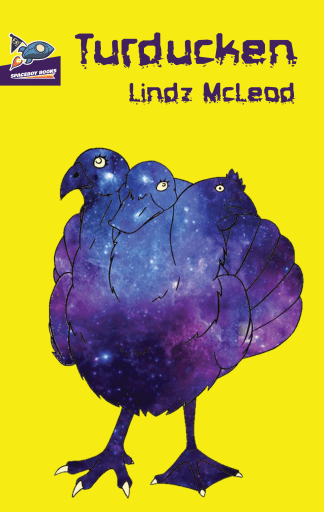
Thank you so much! I absolutely love taking weird, surreal ideas, and making them into normal, accessible, relatable stories. My fiancée is American and celebrates Thanksgiving, which I’d never had before (though I always enjoy another reason to eat a ridiculously large meal) and the idea of a bird, stuffed inside a bird, stuffed inside ANOTHER bird, made me think of all the Gothic novels I read when I was young. It felt like a ‘frankenchicken’. I started to wonder what would happen if such a thing existed and further, what would it be like if each of the birds was alive and sentient. How would they differ from each other? Might they have different goals and desires? A lot of my work stems from asking myself the question ‘what if’, over and over.
Turducken is a story I often read at performances, and there’s a point halfway through, when it switches perspective, where you can hear a sudden silence from the audience. I love that moment when you realise the story you’re hearing/reading is actually a totally different beast.
Turducken the collection combines my favourite and best stories into one book. Every single piece here had to earn its place, and I cut several great stories that I love simply because they didn’t fit with the overall vibe or flow. I included several longer stories—‘Them At Number Seventy-Four’, first published by Pseudopod, is the one people most often tell me they like. The story follows two retirees who have been murdering people together to reignite the spark in their marriage, and the horror is interspersed with them simply going about their daily lives, watching Countdown, eating chips, holding hands on the sofa. A particular favourite of mine is ‘On The Wing’, first published by Flash Fiction Online, a flash about a marriage breaking down, told through collective nouns for particular groups of birds. Again, I’m interested in little details of daily life—how do I make those beautiful to read about, but in a way which isn’t so poetic that it ruins the accessibility or coherency of the piece? I try to write for readers AND for fellow writers at the same time. I want people to be able to say ‘wow, that was a good story’ but also ‘I see the craft techniques you used here and here’. Some of my work has already been critically analysed in that way, and a couple of stories have been taught in schools and universities. Good literature doesn’t have to be stifling and stuffy—it should welcome people in, not exclude them.
A lot of my readers are in the process of finding a publisher. Can you talk about your experience finding a publisher for Turducken?
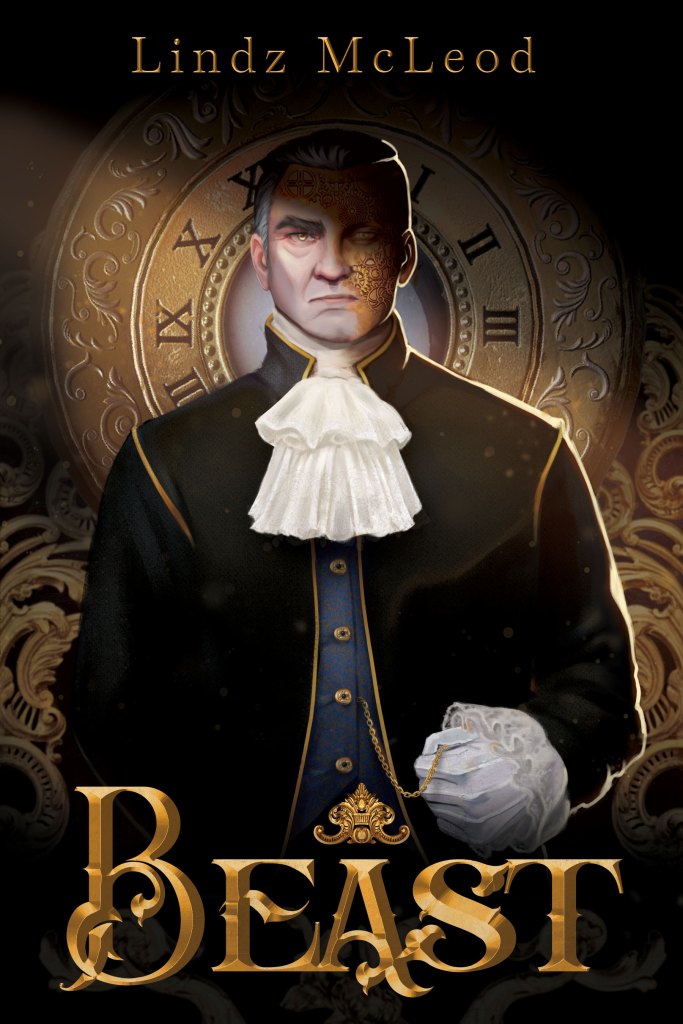
First, it was essentially commissioned by a small press who adored my work, so I put together a collection. Then that press folded and the authors signed there found out a lot of awful stuff in the aftermath about the guy running it. The less said the better, but he duped us and took money from others. Luckily I had several places interested in picking Turducken up and ended up choosing Spaceboy Books, who are wonderful. Nate was kind and thoughtful and beautifully competent, and gave the book extra facets it didn’t have before—drop letters and new font, as well as an e-book and fancy hardback edition which features the art deco cover. My debut novel, Beast, is also coming out with a small press (Hear Us Scream) on 12th October. My agent and I are pursuing traditional publishing too, but I write at such a rate that we decided it was smart to pursue both avenues!
I think it’s important to look at the landscape of publishing and how its changed over the even the last couple of years. A small press might give you more freedom to decide aspects of your book (cover is a big one) which one of the Big Five probably wouldn’t. At a small press, you might have more attention and promotion since you’re one of several authors, whereas at a big publishing you might be one of thousands, though the budget might be much bigger. On the other hand, some small presses can be predatory or have vague, manipulative contractual language—or might simply not fulfil their obligations to you. It’s worth researching the options before deciding which suits you better, and even asking authors who are currently published by that place for their opinions.
You wrote a short story, “Shark Facts My Grandma Told me.” with Sage Tyrtle? How, exactly, did the collaboration process work and would you do it again?
Sage and I have actually have another piece coming soon in Kaleidotrope, called ‘The Real Monsters Were The Children We Terrorized Along The Way’! Last year, Sage had sent me a couple of intro paras to different stories with a note saying she liked both but wasn’t sure where to take either; the shark piece instantly hooked me. I wrote the next paragraph from the awful grandma’s POV and sent it back. She was horrified and deeply amused and wrote the kid’s next paragraph in response. We did that back and forth until we felt it came to a natural ending, and then we edited it a little. I respect her so much as a write— and I believe the feeling is mutual—so whenever one of us would suggest something, the other would immediately see how it might strengthen the piece. I think we have similar, precise approaches to storytelling, which helped. I absolutely adore her work and I think our styles/voices complement each other perfectly, so we’re going to do even more soon when our busy schedules allow. (Ed. Note. “Shark Facts My Grandma Told Me” can be read here.)
What advice would you give writers who are struggling with finding places where their work fits?
While it often seems like a major mag is closing every few months, take heart; lots of small lit mags with specific niche focuses are springing up all the time—a Twitter friend of mine just opened a mag which takes only micro speculative pieces about crabs (Crab Tales Magazine)! While I’ve been lucky enough to be picked up by several pro mags, I’m a huge fan of semi-pro places like Fusion Fragment and Apparition Lit, and non-paying places like HAD and Cotton Xenomorph. They do things a little differently and have different vibes, and they often also nominate for awards. I’d advise all writers to get a free account on Submission Grinder and use their search features to find mags that conform to the specific parameters of your work (genre, word length etc), and then read a couple of pieces in each one to see if your work is a good fit. It sounds time-consuming but even a quick skim will tell you whether you’re in the right wheelhouse. Sending to a targeted market will increase your chances hugely, I cannot stress that enough. Also, if you admire an author, check out their website and see where they’ve been published before!
What are you working on now?
I’m currently writing multiple novels—a historical romance, a contemporary speculative horror, as well as my current obsession: a strange literary novel about megafauna who’ve been resurrected by a stubborn scientist. The megafauna (an anxious undertaker mammoth, a queer model sabre-toothed tiger, and a crocodile pastor, amongst others) are forced to live amongst humans and try to find their own spaces in society. It started as a fun flash and has grown into a huge, complicated, serious work about society, identity, grief, and love.
I’m also working on several film scripts for my own pleasure, as I’ve been working with a company over the past couple of years who shop my work for screen adaptation. Once the WGA strike is over, I’d love to start pitching my own scripts too, though prose will always be my first love. I’m also working with Storio, who are launching a ‘smart story’ app later this year for prose which is accompanied by animation and a soundtrack! It’s very cool.
And of course, I’m also working on my PhD, which I started in January this year. I’m writing a thesis and novel combination which focus on the relationship between vision and intimacy in literature. I’m especially interested in how we can ‘disrupt’ text to provide a different kind of engagement to readers, and also how accessibility might be able to grow and encompass more engagement for a non-sighted audience.
Bonus question:
Have you ever taken a picture of a weird bird?
No, but I do have a weird photo I took of my eldest cat Dane when he was young; he used to stare into a long mirror for ages and get upset that he couldn’t touch the other kitty. One day I took a photo and was disturbed to see that it actually did look like two different cats with different expressions—the mirror cat looks sad and trapped. We ended up calling the mirror cat “ghost brother” and hiding it from him, and eventually getting him a real brother instead! I like to think that Ghost Brother found his own mirror family and is living happily ever after…
Lindz McLeod, along with links to books, stories, and more can be found on the web here.
Beast can be purchased here.
 Finnian Burnett
Leave a comment