
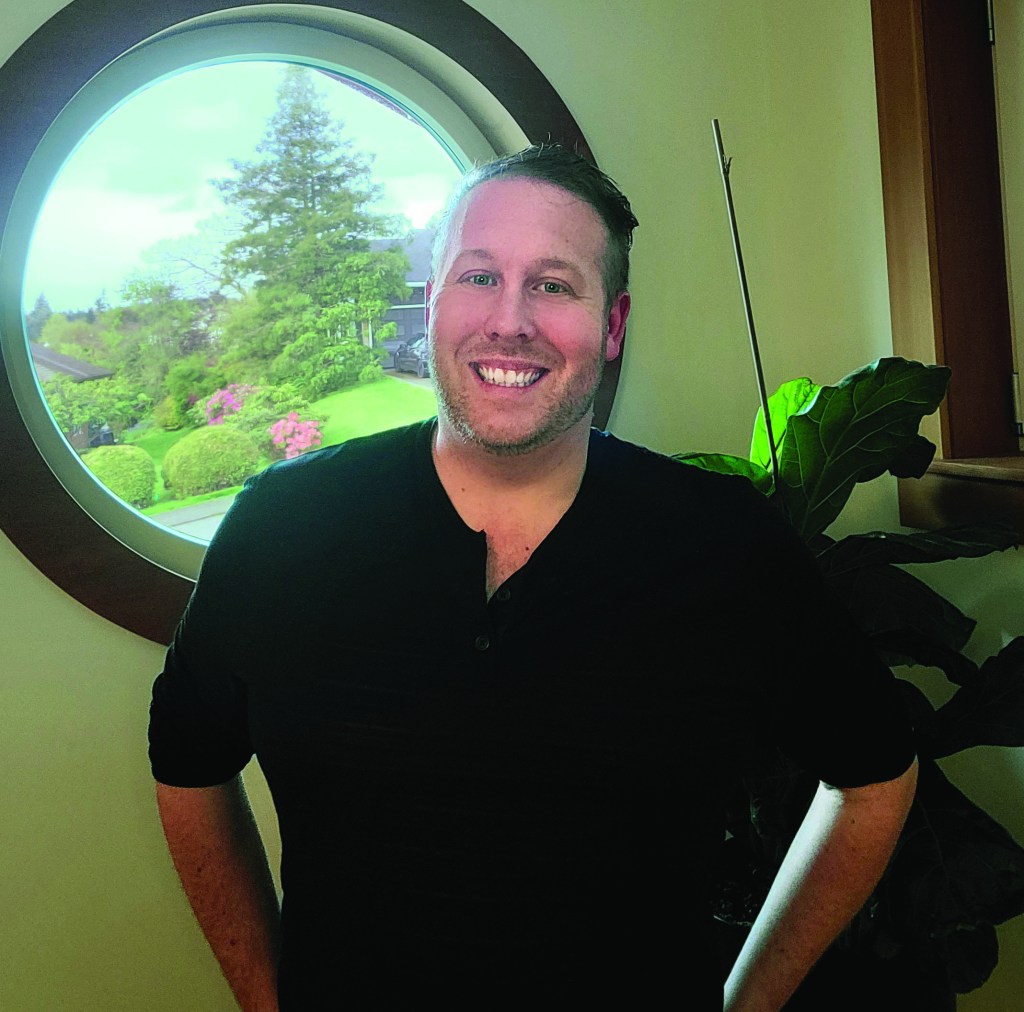
Welcome to the 5 Minutes Series. Each week, I’ll ask five questions of some of my favorite authors, editors, publishers, and other industry professionals. This week, I got to talk to Bryan Mortensen who is not only a writer, but also the executive director of the Federation of BC Writers.
You did the three-day-novel challenge this month. What was that all about and how stressful was it?
I have taken part in the International 3-day Novel Writing Contest run by Anvil Press almost every year for the last eleven years. Some years have been more successful than others. I think the most stressful part of the whole process is coming up with a concept. I wish I was a better planner, but I usually find inspiration for the piece at the eleventh hour. I need to trust myself more on that front. Once I have the idea, my stress tends to reduce significantly.
After figuring out a concept, it is more about endurance and sticking it out. There was a point on day two (For the record this always happens on day two) where I lost steam and could not figure out where I was going with the plot. It felt like I needed to give up, but I talked it out with my writing partner and whammo, the story came back into focus. I wrote over 27000 words in the end. My goal was 30,000, so I was happy with the result. I never take part thinking I will win, but instead focus on having a story with a beginning, middle, and end so that I have a novel to flesh out later. I think if I focused to much on the competition part, it would be a lot more stressful.
What happens now with that book?
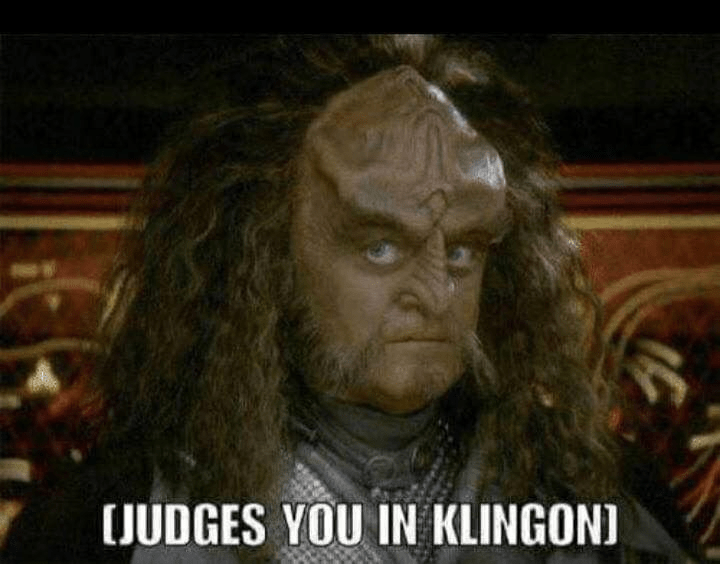
I actually just hit submit on my entry to the contest before jumping onto these questions. Once the novel is written, you can’t edit it in any substantial way. There is a lot of temptation to send it through a more detailed edit process using something like Pro Writing Aid or Grammarly, but that felt like cheating, so I just did a spell check and fixed punctuation. The contest rules are really based on the honour system, and like my Klingon friends from Star Trek, I like to think that honour is important.
The folks at Anvil evaluate the anonymous submissions and create the long list and pick the winner. My understanding is that there are usually a few hundred submissions, so it takes a while to evaluate that many pieces that are all novella length. So, hopefully we will know the results before next year’s competition!
I sent my husband a copy of the unedited manuscript and he is four chapters in and has not given up, so that is a good sign.
You are the president executive director of the Federation of BC Writers. How did you get into that?
It was almost an accident. I joined the Federation of BC Writers as a member, having moved back to BC from Alberta and having made the decision to prioritize my writing. A mentor of mine always drilled into me that joining a writing organization was of great importance to being a professional writer. Not long into it, I got a newsletter with a call for applicants. When I saw the hours, job description, and pay, I thought I would be absolutely bananas to apply. (I would like to add, for the record, most arts orgs are chronically underfunded for the work they do in our communities. Write your MLAs). I had sent in my resume to show I was a serious candidate when I inquired about the role but didn’t technically think I had applied. I got the call to interview and decided to do it anyway and I loved the people. The interview reminded me that the reason I got into not-for-profit work in the first place was the people of it all. The rest is history – hopefully good history, but I guess we’ll see in a few years.
Why should writers join a group like the FBCW?
I get asked that question all the time and it is the hardest question to answer because writing can mean so many different things to different people. Folks prioritize different aspects of the organization depending on where they are in their career and if their writing is even career oriented. I think the best reason to join is to be a part of a community and to support and be supported by fellow writers. I like to think that the community and support element transcends individual programming needs. I would be a bad executive director though if I didn’t say that we have over 1500 members, run over seventy events a year, publish a great magazine, and have some amazing people who are working to provide the best service possible to our members. I am in awe of what our staff accomplish on a shoestring budget. They are all writers or artists themselves, so they get how important it is to support one another. As an organization, we have grown from about 760 members when I joined to over 1500 now. There is a real sense of momentum in terms of what we can offer to our community as we continue to grow. We have some exciting projects in the works for the coming months and into next year, so I encourage people to sign up for our newsletter so that they can find what offerings of the organization resonate with them.
Do you have any advice for writers on finding a way to prioritize their own writing when they’re so busy with everything else?
Working as an arts administrator, a lot of my creativity gets channeled into the Federation. So, for me, I need a shift from my regular routines and distractions. I have two big strategies for that. The first is that I write best when there is tangible timeframe in which to work; by that, I don’t necessarily mean a deadline, but a period of time that I am setting aside for my craft. I think that is why the 3-day Novel Writing Contest works so well for me. It is a short period that is easier to set it aside. I often use it as an excuse to travel somewhere to be inspired for my writing. That’s my second strategy. Julia Cameron talks about taking yourself out on artists dates in her book, the Artist’s Way. She describes them as a way to feel inspired and be engaged by creativity. For me, travel refills my tank and disrupts my routine, so it’s like a giant writing self-care journey. When bigger travel options are not an option, I try to get way from my “work” desk by setting up a new temporary office at my kitchen table (To my husband, I swear I will take it down soon), or going to a coffee shop. These things all make it possible.
Bonus question:
Have you ever taken a picture of a weird bird?
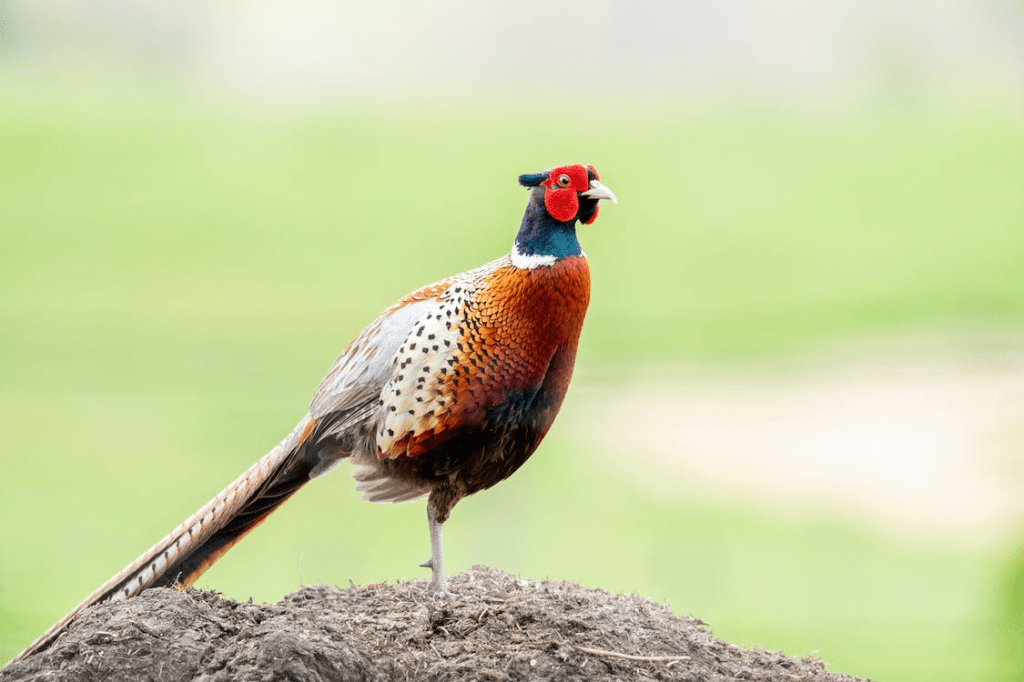
I have. I have this app caller Merlin Bird Identifier. It uses your phone microphone to identify bird calls. It is all terribly nerdy. I was at Words on the Lake this year in Salmon Arm and kept seeing this bird with a red head and distinct colourful markings. I took pictures but could not quite find what it was online. I eventually was able to open the app at the right moment and catch it’s sound to identify it. It was a Ring-Necked Pheasant… I did not know until then that pheasants were a thing here.

 Finnian Burnett
Leave a comment