
Welcome to the 5 Minutes Series. Each week, I’ll ask five questions of some of my favorite authors, editors, publishers, and other industry professionals. This week, I got to talk to Christen Randall whose upcoming book has been on my TBR list since the moment I heard about it.
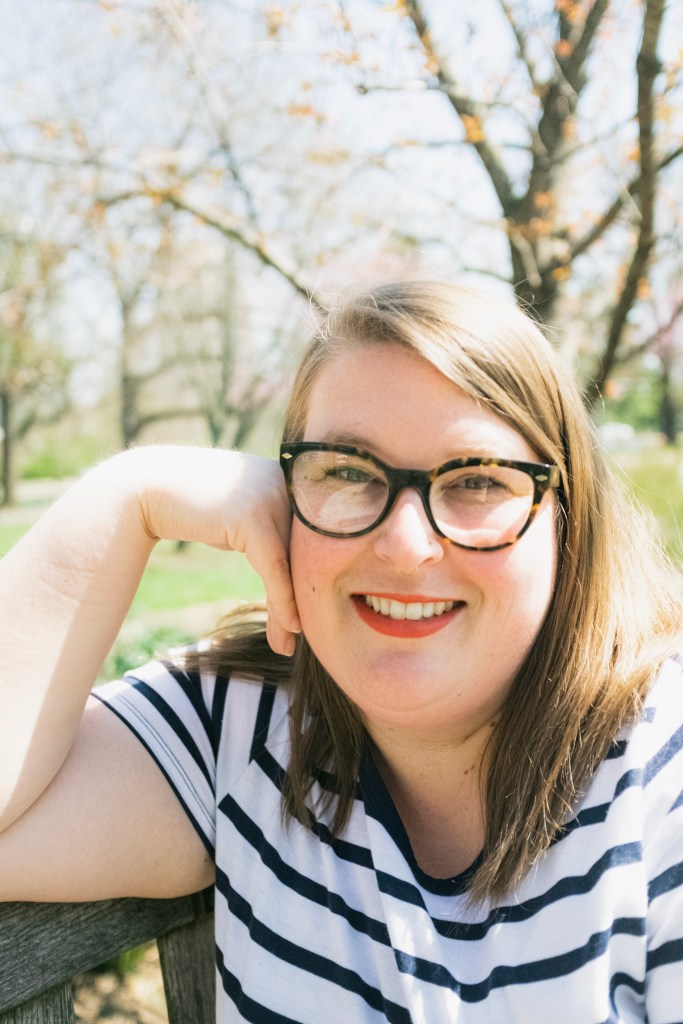
First of all, tell me about your upcoming book. What’s it about, where can I get it, why isn’t it right now?
“Why isn’t it right now” is the question I ask myself all the time because I am so ready to share this book with the world!
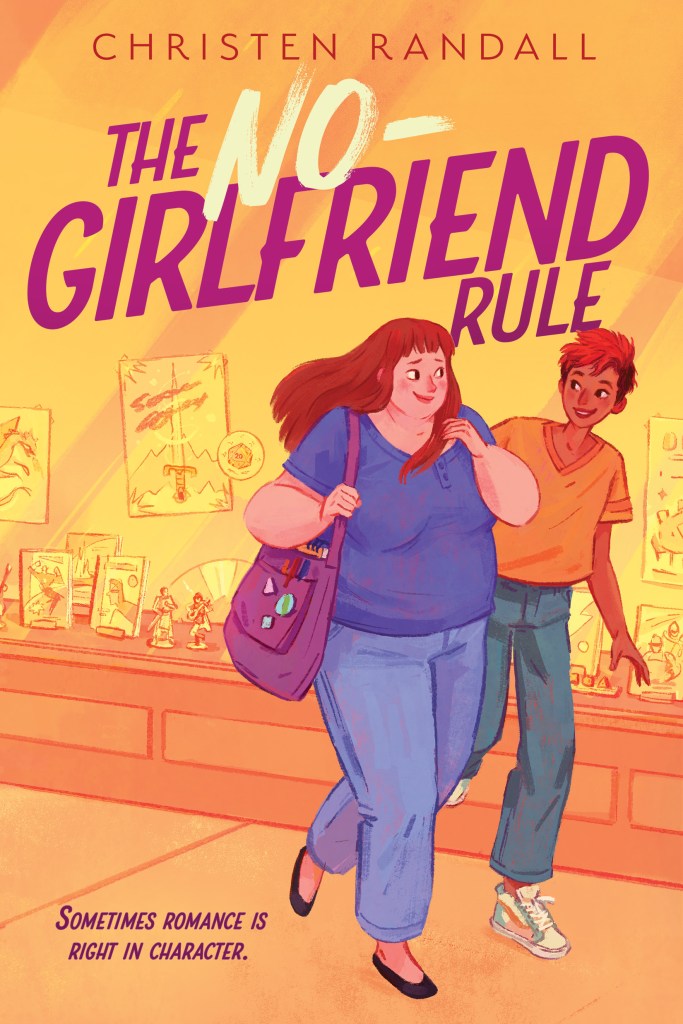
THE NO-GIRLFRIEND RULE, my debut queer YA contemporary romance, is about Hollis Beckwith, a fat teen artist with anxiety, who wants to play tabletop roleplaying game Secrets & Sorcery to try and prove to her boyfriend that she’s worth a place at his table beyond senior year. But more important to his game than any rule in the handbook is the No-Girlfriend Rule: girlfriends–Hollis–can’t join his game. Hollis seeks out a space of her own and finds herself in an all-girl group. As she steps into character, Hollis begins to step into herself, using Honoria Steadmore, her brave and steadfast human paladin, to explore such wild fantasies as finding her voice, becoming a leader, and being a part of a community that accepts her radically just as she is. But when an in-game crush on the party’s bard, played by dreamy and epically cool Aini Amin-Shaw, spills over into the real world, Hollis embarks on her most harrowing adventure yet: having A Thing for a girl.
THE NO-GIRLFRIEND RULE is a love letter to TTRPGs, epic girl squads, and the most precious magic of all: allowing yourself to take up space and stand boldly in your truth. If you’ve ever wondered “What would happen if two D&D characters fell in love and then also their players fell in love?,” shipped #Imodna, cried over Sapphic fanart, needed a warm hug in book form, or just been gay and played (or wanted to play!) a TTRPG, this book is for you.
It’s available for pre-order wherever you like to get your books! You can add it to your TBR on Goodreads or The StoryGraph. Check out the cover reveal and exclusive first chapter preview (the whole first chapter! free for you to read!) on Gizmodo.
I write a lot about queerness and various intersections of identity, so I was thrilled to hear of you writing about fatness, geekiness, girl power, etc. What inspires you to write about these things?
So I have always been those things–I grew up fat, and nerdy, and neurodiverse, and anxious, and queer, and so the most obvious answer to this is the old adage about writing what you know. But I think the honest answer is that because I grew up all of those things at once, I didn’t often feel seen. I would find a book about a nerdy kid who liked nerdy stuff, but she wanted to get the boy. Or I would find a show with a fat kid, but they were the funny side character and the punchline of jokes and not much else. It was too much to be fat, or gay, or neurodiverse–let alone all those things at the same time. It felt isolating, and for a long time it made me feel like there was something wrong with me, or at the very least something Not Right. Now, every time I sit down at my desk to write a story, I get to write stories that joyously honor the whole of myself–and, I hope, the whole of readers with all these weird, wonderful parts, too. I want anyone who picks up my book and feels seen by Hollis to know they are absolutely worth the swoony romance, the epic adventure–worth being the main character of their own stories.
A lot of people want to write queer characters now, but not everyone gets it right. What advice would you give to people who are writing outside their lived experiences as queer folks?
Hang out with queer people. Hang out with trans people. Hang out with non-binary people. And not in a weird, I-am-here-to-study-you-for-a-book way; be friends and allies to us. Show up to listen and learn. Queer experience isn’t monolithic; there are so many beautiful ways to be queer. Hang out with us and see this and let that lovingly inform your writing.
Found family is important to queer people, both in books and in real life. Have you found a community in your real life and does it inform your writing?
Yes, absolutely, and it informs all parts of my life, my writing included. So much of my community has come to me through gaming, too. When I first moved to Covington from Nashville, I pulled a Hollis and stumbled across an advertisement for a women’s and gender-expansive Dungeons and Dragon game. The game has since ended (oh, scheduling, a beast more fearsome than the most ancient of dragons) but that community remains, and the folks I met there are some of my most ride-or-die pals in the world. I owe that in part to the intersection of queerness and tabletop roleplaying; there’s such a soul-searching and self-awareness demanded by stepping into queerness (or at least for me there was, in a very big way) and tabletop invites the exploration of the same, but in the small, safe microcosm of an imaginary world. When you sit down to play, especially with other queer folks, there’s this radical communal vulnerability you hold space for, even if on the surface level you’re cracking fart jokes with a bunch of people pretending to be wizards and barbarians, and it’s hard to step away from that table without having found your people.
I try to bring this sort of energy to the stories I write. My in-world friend groups are always going to show up for each other–on their fart joke days, on their anxiety days, on their epic win days, and everything in between. And that’s not in spite of. That’s because of. There’s something really special, especially writing in YA space, about showing that kind of community as being accessible to and deserved by everyone, period.
We met at the WriteHive online writing conference. Tell me a bit about that experience for you and what advice you would give to other writers wanting to take part.
WriteHive Con was amazing–and not just because we connected there!
This actually ties neatly into the idea of community we discussed above. One of the wonderful places I have found so much of my family has been in the company of other writers and readers, and it’s important to me as an author (and just a human in general) to foster that community with as few access barriers as possible. Traditionally, publishing and author space hasn’t been accessible, especially if you’re part of a marginalized community. Events like WriteHive Con, which is completely free and entirely online, help make information easier to access to folks who might not have a way of getting it otherwise. So much of my ability to find success as an author has been due to accessible information online and the folks within the community willing to reach a few rungs down the ladder to share it and help pull me up. So just in general–very here for folks within the writing community coming together to share what they know in accessible ways.
WriteHive Con was especially cool because they bring a little bit of everything to the table. I was on a panel with other traditionally published authors about LGBTQIA+ rep in fiction, but there were also panels about self publishing, and how to navigate social media as a writer, and the rise of book bans, and fanfiction, and just like, everything. And it was all so fantastically organized and executed that I just had a blast.
If you’re an author, I strongly encourage you to take part in events like WriteHive Con! What you have to say and what you have learned are valuable to share within the community. Holding the door open for folks is part of the gig for me (gatekeeping is so two thousand and late), and I encourage you to make it an important part of your authorship, too.
Bonus question: Have you ever taken a picture of a weird bird?
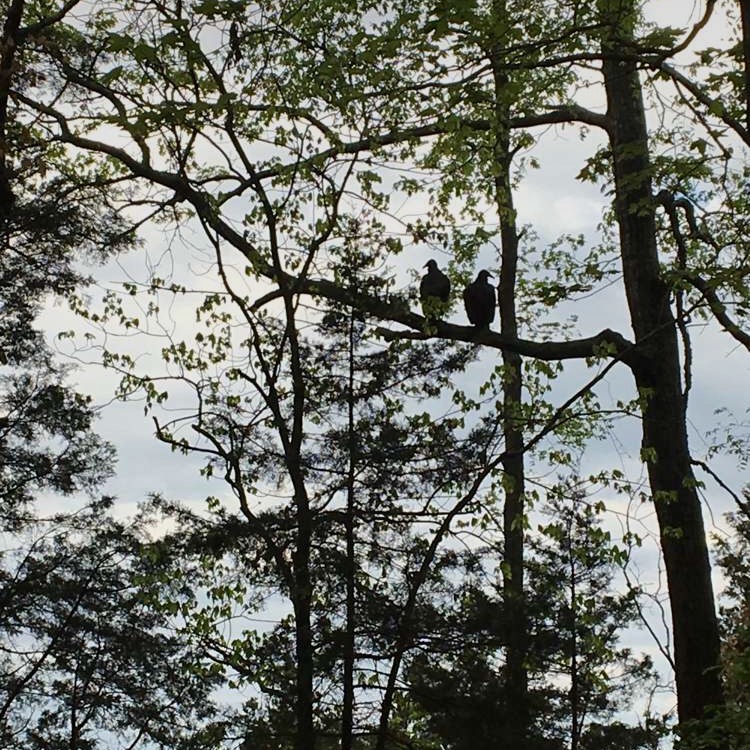
Have I ever taken a picture of a weird bird? Uh, yeah. A fun bit of Christen Trivia: birds and birding are a frequent object of my ADHD hyperfixation, and given half a chance I will chat your ear off about local songbirds, which is my favorite, and why. (It’s a toss-up between tufted titmouse–cute song, cute crest, will be adorable for sunflower seeds–and the Carolina wren–very sassy, very smart, will fight you.) But one bird I especially love is the black vulture, because they’re…just kind of cool weirdos. They’re adaptable, and vital to their ecosystems, and a little spooky, and surprisingly communal. I just think they’re neat!
Here’s a picture from a few years ago of two black vultures sitting in a tree, proving weird pals can also be really beautiful.
(Also, if “weird” and “bird” are your vibe, you should fully check out Bianca Torre is Afraid of Everything by Justine Pucella Winans. It’s a campy birding murder mystery with tender, true-to-life queer rep perfect for the odd duck in your life, especially if that’s you.) (Ed. note. Thanks a lot, Christen. Just added another book to my TBR list.)
Christen Randall can be found on the web here. They can also be found on social media in various places:

 Finnian Burnett
Leave a comment