
Every week, I talk to a writer, publisher, editor, or other industry professional about their experiences in the writing world. This week, I’m excited to have the chance to talk to Gar McVey-Russell.
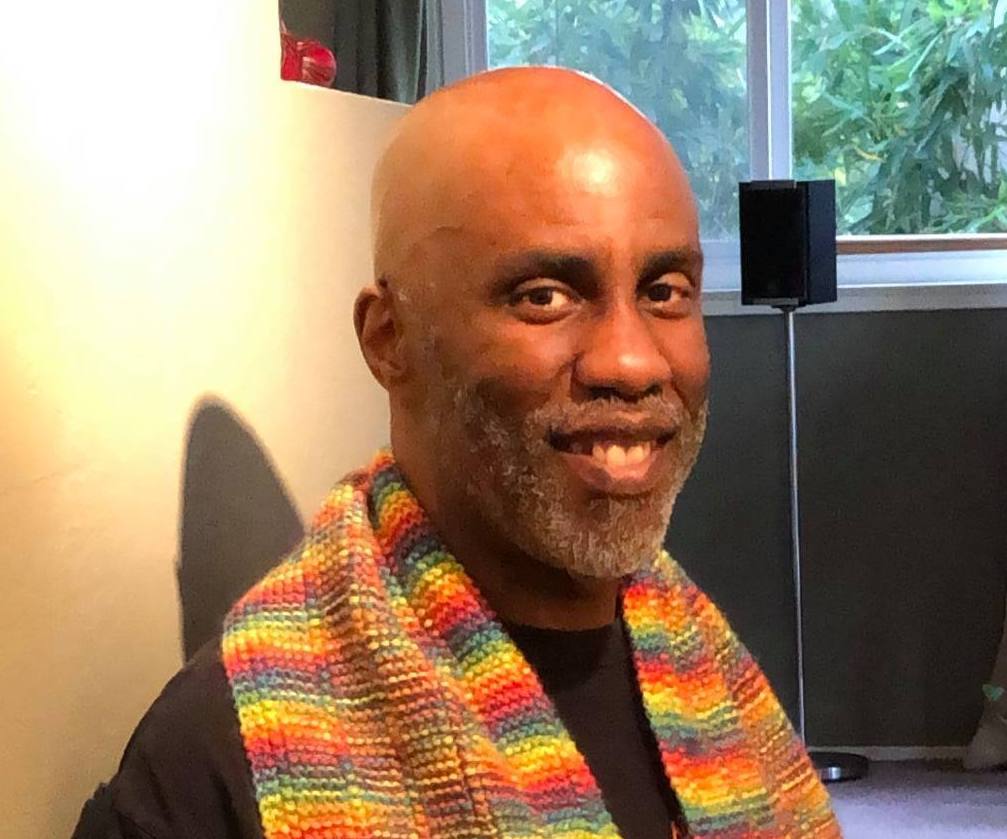
You recently retired. How has your writing life changed since then, or has it?
“Wow! When I retire, I can write whenever I want to!”
Be careful what you wish for, you might get it. Imagine almost all of the excuses you have for not working on a project vanishing so that you wake up and all you need to do is write. “All.” The pressure!
It actually hasn’t been as bad as all that. While I felt a certain amount of pressure to “produce” the minute I stopped working, I had the good sense to take it slow. I don’t have to do all of my writing, reading, music and language studies, and all else in a day, or a week, or a month. It had been four years since I last had a 3-week vacation, so my first priority upon retiring was to rest. I spent most of July taking naps and going to jazz concerts. It was heaven. Now that we’re rolling into August, I’m starting to structure my days so that I have at least one good writing session of 2-4 hours a day. But I still see naps and jazz concerts as essential parts of the writing process.
Tell me about your book, Sin Against the Race. What inspired it and what was the reception?
Sin Against the Race started with the idea of a young man coming to grips with his sexuality and just as he does so, he witnesses a gay bashing in the park across the street from where he lives. That was the genesis, dating back to the early 1990s, shortly after I came out. It went through a whole lot of permutations from that time to 2017 when I finally published it. As I originally conceived the story, the witness to the gay bashing, Bill, was the protagonist. He has a friend he meets at college who come from a very religious family and who eventually gets thrown out of the house. This character eventually becomes Alfonso I later realized that Alfonso is the true center of the story.
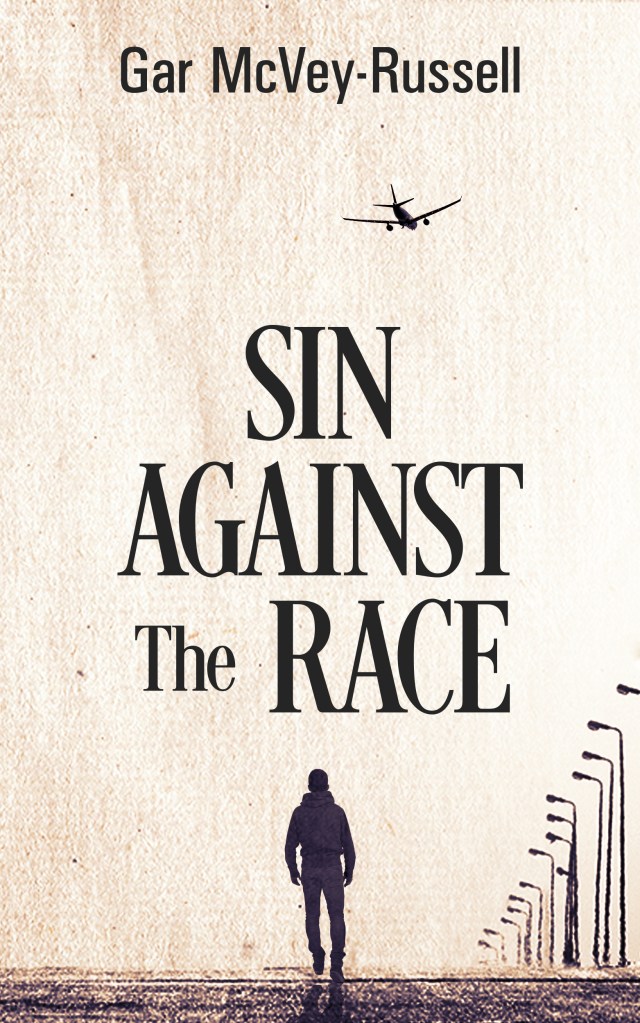
Lots of current events informed the story. AIDS, ACT UP, the Rodney King beating. In the late 1990s, an AIDS clinic in East Oakland called Casa Segura, burned down under mysterious circumstances. The clinic came under controversy because it operated a needle exchange program. Even though the county of Alameda supported needle exchange programs—I was involved in establishing the needle exchange in Berkeley with ACT UP/East Bay—many in the community around Casa Segura opposed it. This also fed into SATR, in fact, the fiery death of an AIDS clinic starts the story and the dramatic arc for Alfonso. So current events had a lot of input into SATR’s development.
It took about 25 years to write SATR from first conception to publication, and during that time there was many lulls, some lasting years. What motivated me to give it one more shot was the 2008 election of Barack Obama and the simultaneous passage of Prop 8 in California, the proposition that ended marriage equality in my home state just a few months after the CA Sup. Court legalized it. The contrast of electing America’s first Black president and placing discrimination in the California state constitution really fucked with my head. So at that point, I gave myself permission to do what I always intended to do, write about Black homophobia. I don’t for a second think that Black homophobia is what “passed” Prop 8. That’s racist bullshit. However, the “Yes on 8” campaign used the specter of Black social conservatism as a wedge issue during the campaign. They sent out a mailer with a group of Black preachers stating their opposition to marriage equality. The mailer even included a quote from then-Senator Obama, stating his opposition to marriage equality at that time. More than anything, I wanted to debunk all that and say that the Black community has its share of homophobia, like any other community; but that the community as a whole has evolved, along with the rest of society. And those who haven’t evolved look foolish.
Finally, SATR has a lot of jazz! I listened to jazz while working on the manuscript. In time, the music crept into the storyline, becoming a virtual soundtrack. Indeed, I’ve had readers tell me that they looked online for the music referenced in the story. Jazz became personified by the character Sammy the storekeeper. He is sort of the lynchpin of the story, the den mother who takes care of the story’s Black queer community. In his corner bodega, he plays jazz constantly from a huge CD collection. Later in the story, we learn that Sammy is a semi-retired jazz drummer and composer, and Alfonso helps to revive that side of himself during the course of the story.
Regarding SATR’s reception, I’m rather surprised that it has received such positive feedback, particularly since I self-published and knew virtually nothing about the process of promoting a book before it publishes (sending it to places for review, etc.). It ultimately received recognition from The Advocate, who included SATR as one of the best reads for 2018, which I found extremely flattering and surprising. I’m forever grateful for the help of my longtime friend Michele Karlsberg, whom I hired as my publicist to help get the word out and introduce me to the queer writing community.
I saw you a couple years ago on a panel on writing about trauma and you said, “When you live in this world as a Black man, everything you write has at least an underlayer of trauma.” Does that idea still inform your writing?
More than ever, sadly.
Shortly after that man, whom I call Dumb-Dumb, became president in 2016, I reread James Baldwin’s Notes of a Native Son and other essays. What frightened me was how much his words hold true over 50, 60 years after he wrote them. Society has learned nothing. And now, in the post-Obama era, the racists have stepped up their game considerably. They have yanked off their hoods, put down their dog whistles, and started using bullhorns, with much enthusiasm. It’s like “it’s cool to be racist and put Black and Brown people down”; “It’s cool to be a transphobe, a homophobe, a misogynist”; “It’s cool to be ‘anti-Woke’”. This trauma exists on top of other traumas, such as climate change and the pandemic, magnifying these more general traumas. It’s unsettling, disturbing, fatiguing, and dangerous. With progress comes backlash, and we’re witnessing hella backlash.
Along those lines, what are you working on right now?
My second novel deals with wish fulfillment, at any cost, and the damage that can cause. It deals with race, sexuality, sexual violence, friendship, the right to establish one’s own life, and the power of music. It’s kicking my ass, but now that I’m retired, I have more time to concentrate on it.
If you could offer any advice to other writers, what would it be?
Read. Read. Read. Read. Read. Read. Read. Read. Read. Read. Read. And, read.
Read what interests YOU. Challenge yourself, go after the book that scares you, because often that’s the book you need to read the most. However, having said that, if you find that something doesn’t work for you, put it down and read something else. Maybe try the passed book again later and you’ll find that it speaks to you better. I guess what I’m trying to say is read what inspires you. Read what makes you want to jump to your writing instrument of choice and go for it. After a good concert, I’ll get home and want to play my own instrument (tabla) for hours on end, inspired what by I heard. A good book should do the same type of thing, make you want to write.
Bonus question: Have you ever taken a picture of a weird bird?
I love this question! And I wish I had a good answer, but alas I don’t. I’m hoping to do a lot more traveling in retirement, so maybe I’ll have more opportunity to take a photo of a weird bird. Though I doubt I’ll go see any shoebills in my travels. They epitomize weird—but they’re cute!

Gar McVey-Russell can be found on the web here. Sin Against the Race is available at local bookstores, online retailers, and from your public library, just request it! See a list of available sites for purchasing here.

 Finnian Burnett
Leave a comment